Jaipur & the North-East
The capital region: planned bazaars, hill forts in the Aravallis, painted havelis and tiger country within reach.
Explore the places, flavours, stories, experiences and traditions that make Rajasthan unforgettable — with honest guides and free tools to plan your trip.
Six ways into the state — choose a thread and follow it.
Sixteen cities and regions, from desert forts to lake towns.
Kachori breakfasts, specialty coffee and royal kitchens.
Forts, stepwells, festivals and living crafts.
Desert nights, safaris and sacred mornings.
What to buy, where, and how to buy it well.
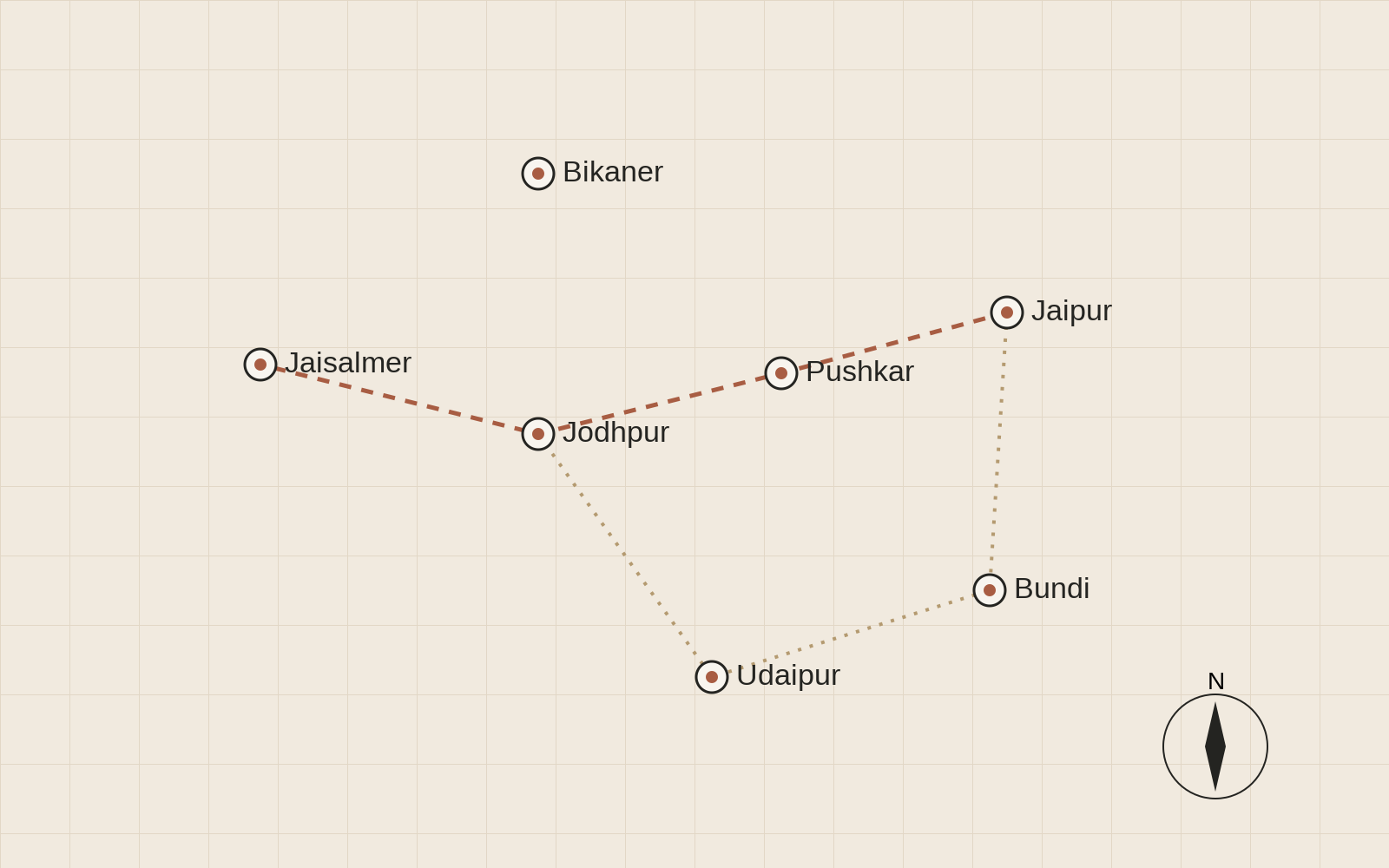
Itineraries, seasons and free planning tools.
The land of kings: India's largest state, where hill forts crown the Aravallis, the Thar Desert stretches west, and cities like Jaipur, Udaipur and Jodhpur keep centuries-old crafts, food and festivals alive.
Heritage & cultureEach city has its own colour, cuisine and rhythm. Start with six of our favourites.
Rajasthan’s historic regions shaped its architecture, dialects and food. Knowing them makes the map make sense.
The capital region: planned bazaars, hill forts in the Aravallis, painted havelis and tiger country within reach.
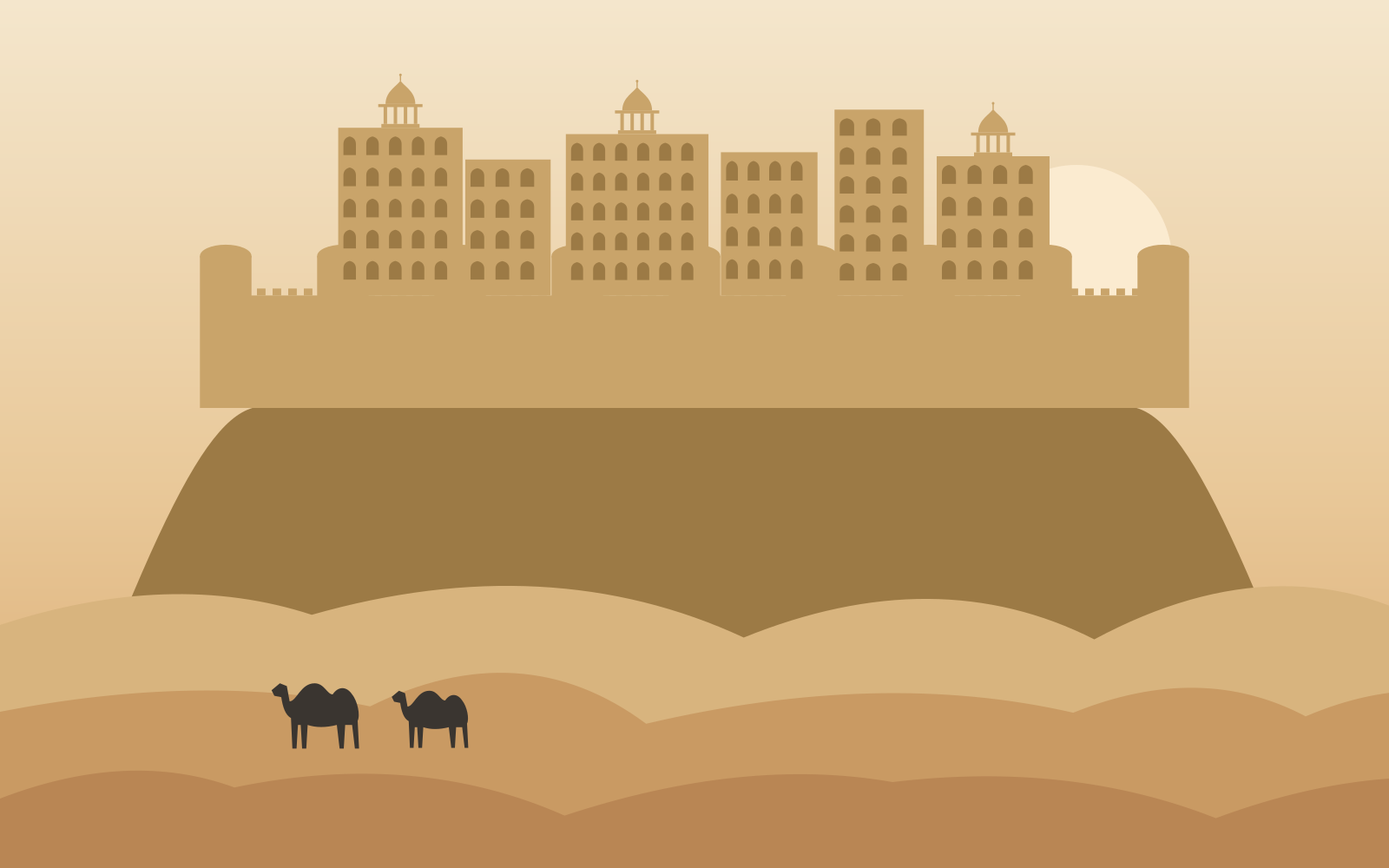
Blue lanes, golden sandstone, desert villages and the long horizons of western Rajasthan.
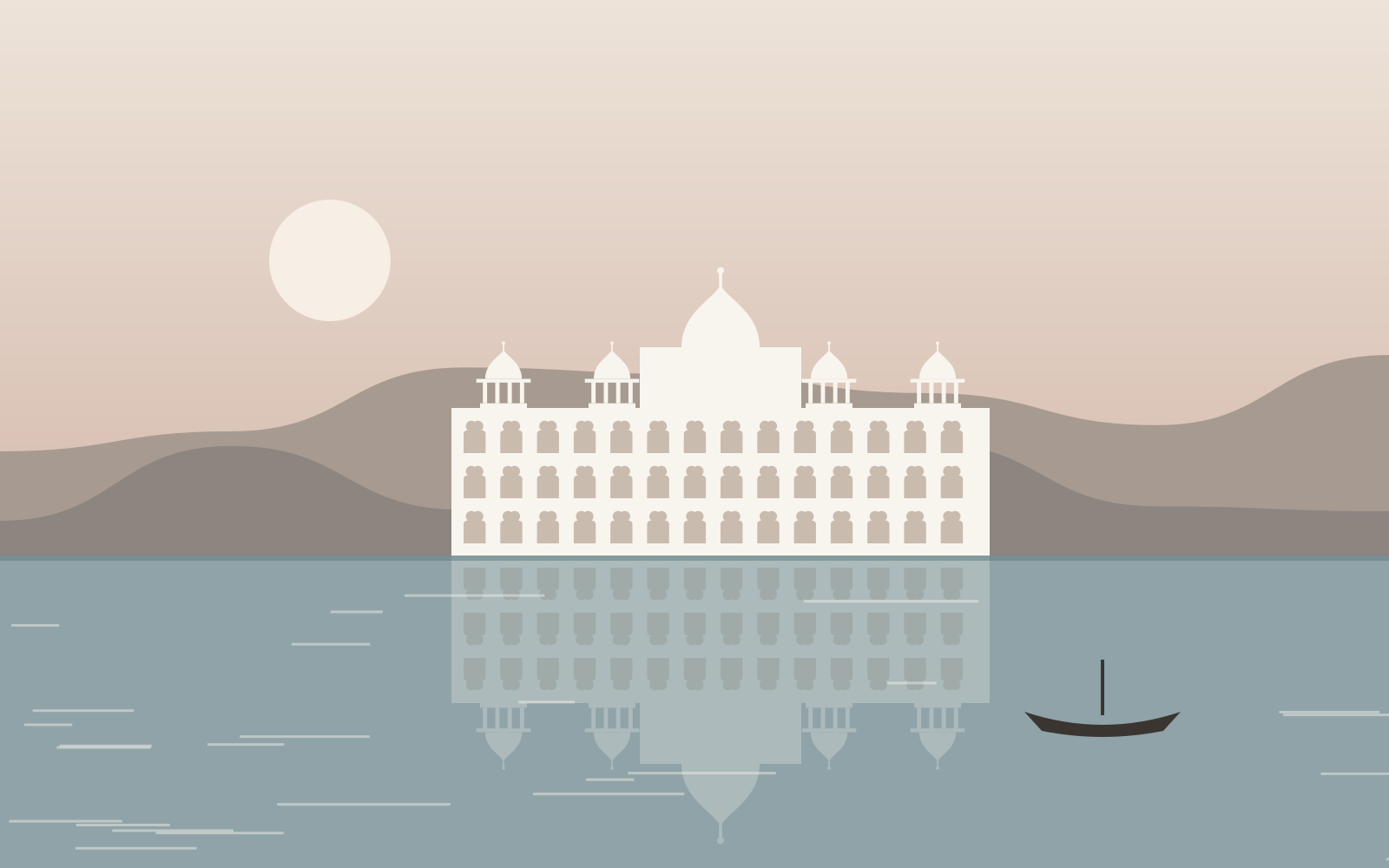
Lakes, hills and the great fort-cities of the Sisodia kingdom, plus Rajasthan's only hill station.
Pilgrim towns, stepwells, mural-painted palaces and the river country of the south-east.
Long reads on food, heritage, destinations and craft — written to be useful, not just pretty.
Udaipur was built around water and still lives by it. A guide to the lakes, palaces, ghats and studios of Mewar's capital — and to the pleasure of not rushing.
Jaipur sits at the centre of a ring of remarkable places — salt lakes, stepwells, tiger forests, painted towns and pilgrim lakes. Here's how to choose your weekend.
Jaipur's cafes have become places to read, work, meet and linger. This is a guide to the kinds of cafe the city does well — and how to find the ones that suit you.
From Mehrangarh's ramparts, Jodhpur looks like a cubist painting in blue. Down in its lanes it is louder, warmer and hungrier. Here's how to experience both.
Desert ingredients, royal kitchens and a new generation of cafes. Here's where to start.
Forts still lived in, stepwells still visited, songs still sung. Rajasthan's past is part of its present.
“A destination is more than its landmarks. It is the stories, flavours, streets and people that make it memorable.”
The Rajasthan.life philosophy
An editorial guide to the state’s crafts — what’s made where, and how to recognise good work.
The short answer is October to March — but every season has a reason to visit.
Short journeys from the big cities — chosen for atmosphere, not just proximity.
Ghats, temple bells and a slow sunset.
A Sufi shrine and a lake ringed by hills.
Stepwells, murals and quiet lanes.
Kumbhalgarh's walls and Ranakpur's marble.
Desert-edge temples and Bishnoi villages.
Eight experiences that define a journey through the state. Keep track of yours with our interactive list.
From the dunes beyond Jaisalmer.
Ramparts, gates and painted rooms.
Spices, textiles, everyday life.
A thali, a kachori, a ghewar.
A night in a haveli or palace.
Bundi, Shekhawati, Bikaner.
Watch a block printer at work.
Chand Baori, Raniji ki Baori.
Business details appear only after we check them.
No invented ratings, reviews, rankings or visitor numbers.
Guides are reviewed and dated as places change.
Places are homes, temples and workplaces first.
Clear answers to the questions travellers ask most.
Rajasthan is famous for its forts and palaces, the Thar Desert, colourful cities such as Jaipur, Jodhpur, Udaipur and Jaisalmer, crafts like block printing and blue pottery, festivals, folk music, and food such as dal baati churma.
October to March is the most comfortable time for most of the state. April to June is very hot, and the monsoon (July to September) brings greener landscapes, fuller lakes and festivals such as Teej.
Seven days covers Jaipur, Jodhpur and Udaipur. Ten days adds Pushkar and Jaisalmer. Fourteen days allows smaller places like Bundi, Kumbhalgarh, Ranakpur and Chittorgarh at a comfortable pace.
Jaipur is the usual starting point: it is well connected by air and rail and gives a rich introduction to Rajasthan's forts, bazaars, crafts and food.
Hand block-printed textiles, bandhani and leheriya, blue pottery, kundan and meenakari jewellery, mojaris, miniature paintings, dhurries and lac bangles.
Dal baati churma, gatte ki sabzi, ker sangri, laal maas, bajre ki roti, pyaaz kachori, mirchi bada and sweets such as ghewar and mawa kachori.
Free tools that run in your browser — no sign-up, no tracking. Build an itinerary, estimate a budget and pack for the season.
Discover places, experiences, stories, food and culture worth exploring across Rajasthan.
Occasional letters, no spam. See our privacy policy.