Rajasthani Food Guide: Dishes, Flavours and Culinary Traditions You Must Explore
Desert scarcity, royal kitchens, merchant households and pilgrim towns all shaped what Rajasthan eats. A guide to the dishes — and the logic behind them.
In this guide (17 sections)
- Introduction to Rajasthani food
- Regional influences
- Dal baati churma
- Gatte ki sabzi
- Ker sangri
- Laal maas
- Safed maas
- Bajre ki roti
- Other dishes worth knowing
- Traditional sweets
- Street food
- Regional variations
- Vegetarian traditions
- How to eat a Rajasthani thali
- A short glossary
- Eating with the seasons
- Food experiences
Rajasthani food makes sense once you picture the land. Much of the state is arid; for centuries, fresh green vegetables and water were precious. Cooks responded with ingenuity: desert beans and berries dried in the sun, millets that grow in poor soil, gram flour turned into dumplings and curries, and plenty of milk, buttermilk and ghee. Food had to survive heat and long journeys. The result is a cuisine of deep, concentrated flavour — and one of India's great vegetarian traditions.
Alongside it runs a different story: the kitchens of Rajput courts, with their hunting traditions and slow-cooked meats, and the sweet-making skills of merchant towns like Bikaner.
Rajasthani food is known for dal baati churma, gatte ki sabzi, ker sangri, laal maas, bajre ki roti and sweets like ghewar and mawa kachori. It relies on dried desert ingredients, millet, gram flour, dairy and ghee — a response to a dry climate where fresh produce was scarce.
Introduction to Rajasthani food
Three ideas help explain what you'll eat:
- Preservation. Many dishes keep for days — dry curries, pickles, sweets rich in ghee and sugar.
- Substitution. Where green vegetables were scarce, gram flour (besan), lentils, dried berries and beans became the "vegetables".
- Community. Rajasthan's Marwari, Jain, Rajput, Brahmin and pastoral communities each shaped the cuisine. Strict vegetarianism coexists with a strong meat tradition.
Regional influences
- Marwar (Jodhpur, the west): hearty, chilli-forward, with desert ingredients like ker, sangri and kumatiya.
- Mewar (Udaipur, the south): a little greener thanks to more rainfall; known for thalis and household dishes.
- Dhundhar (Jaipur region): the meeting point of royal, merchant and street traditions — famous for kachoris and ghewar.
- Bikaner and Shekhawati: merchant kitchens, sweets and namkeen.
- Hadoti (Kota, Bundi): kachoris and spicy snacks.
Dal baati churma
The dish most associated with Rajasthan. Baati are hard, round wheat-flour dumplings, traditionally roasted in embers or baked, then cracked and soaked in ghee. They're served with dal — often panchmel, a mix of five lentils — and churma, made by crushing baati or wheat dough and mixing it with ghee and sugar or jaggery.
A popular story links baati to soldiers or travellers who buried dough in hot sand to cook — a nice tale, though hard to verify. What's certain is that it's filling, travels well and tastes deeply of ghee and smoke.
Gatte ki sabzi
Gram-flour dough is spiced, rolled into logs, boiled, sliced and simmered in a yoghurt-based gravy. Gatte are the archetype of Rajasthani substitution: a "vegetable" made from pantry staples. Variations include gatte pulao and gatte served dry.
Ker sangri
Ker is a small, tart desert berry; sangri are the long beans of the khejri tree, which grows across the Thar. Both are dried and cooked with spices, oil and sometimes dried mango. The result is tangy, earthy and unmistakably of the desert. It pairs perfectly with bajre ki roti.
Laal maas
"Red meat" — a mutton curry made fiery and deep red with dried chillies, traditionally associated with the Mathania chilli of the Jodhpur region. It's linked to the hunting kitchens of Rajput courts. Expect heat.
Safed maas
The opposite of laal maas: a rich white mutton curry made with yoghurt, cream, nuts and whole spices, mild and aromatic. Often found in heritage-hotel kitchens.
Bajre ki roti
Flatbread made from pearl millet (bajra), a hardy grain suited to dry land. It's denser than wheat roti, nutty, and traditionally eaten with ghee, jaggery, garlic chutney or ker sangri — especially in winter.
Other dishes worth knowing
- Kadhi — a yoghurt and gram-flour curry; Rajasthani versions are often thinner and tangier.
- Panchkuta — five desert ingredients cooked together.
- Papad ki sabzi — a curry built around papad.
- Mangodi — sun-dried lentil dumplings cooked in gravy.
- Raab — a millet and buttermilk drink, cooling in summer.
Traditional sweets
- Ghewar — a disc-shaped, honeycomb-textured sweet soaked in syrup, sometimes topped with rabri. Closely associated with Teej and the monsoon.
- Mawa kachori — Jodhpur's sweet kachori filled with khoya and dipped in syrup.
- Malpua — sweet pancakes fried and soaked in syrup, especially loved in Pushkar.
- Churma laddoo — churma pressed into balls.
- Mohanthal — a rich gram-flour fudge.
- Sohan halwa — a dense, chewy sweet associated with Ajmer.
- Rasgulla and other milk sweets — Bikaner has a strong sweets culture.
Street food
- Pyaaz kachori — Jaipur's breakfast staple.
- Mirchi bada — Jodhpur's stuffed and fried chilli.
- Dal kachori — another kachori variant found across the state.
- Kota kachori — a crisp, spicy speciality of the Kota region.
- Bikaneri bhujia — the famous gram-flour namkeen of Bikaner.
- Lassi — sweet or salted, often thick with malai.
Choose busy stalls with fast turnover, eat food fried in front of you, and avoid uncooked garnishes if you have a sensitive stomach. Carry water and start with smaller portions.
Regional variations
Rajasthani food changes as you travel:
| Region | Look for |
|---|---|
| Jaipur | Pyaaz kachori, ghewar, thalis |
| Jodhpur | Mirchi bada, mawa kachori, laal maas, makhaniya lassi |
| Bikaner | Bhujia, sweets, namkeen |
| Udaipur | Mewari thalis, dal baati |
| Jaisalmer | Ker sangri, desert dishes |
| Pushkar | Malpua and vegetarian fare |
| Kota | Kachori |
Vegetarian traditions
Rajasthan is one of India's best places to eat vegetarian. Jain cooking avoids root vegetables like onion and garlic; Vaishnav temple traditions in places like Nathdwara influence food offered and eaten; pilgrim towns such as Pushkar are entirely vegetarian. Even in meat-eating households, everyday meals are often vegetarian.
How to eat a Rajasthani thali
A thali is a complete meal on one plate, and there's an art to it:
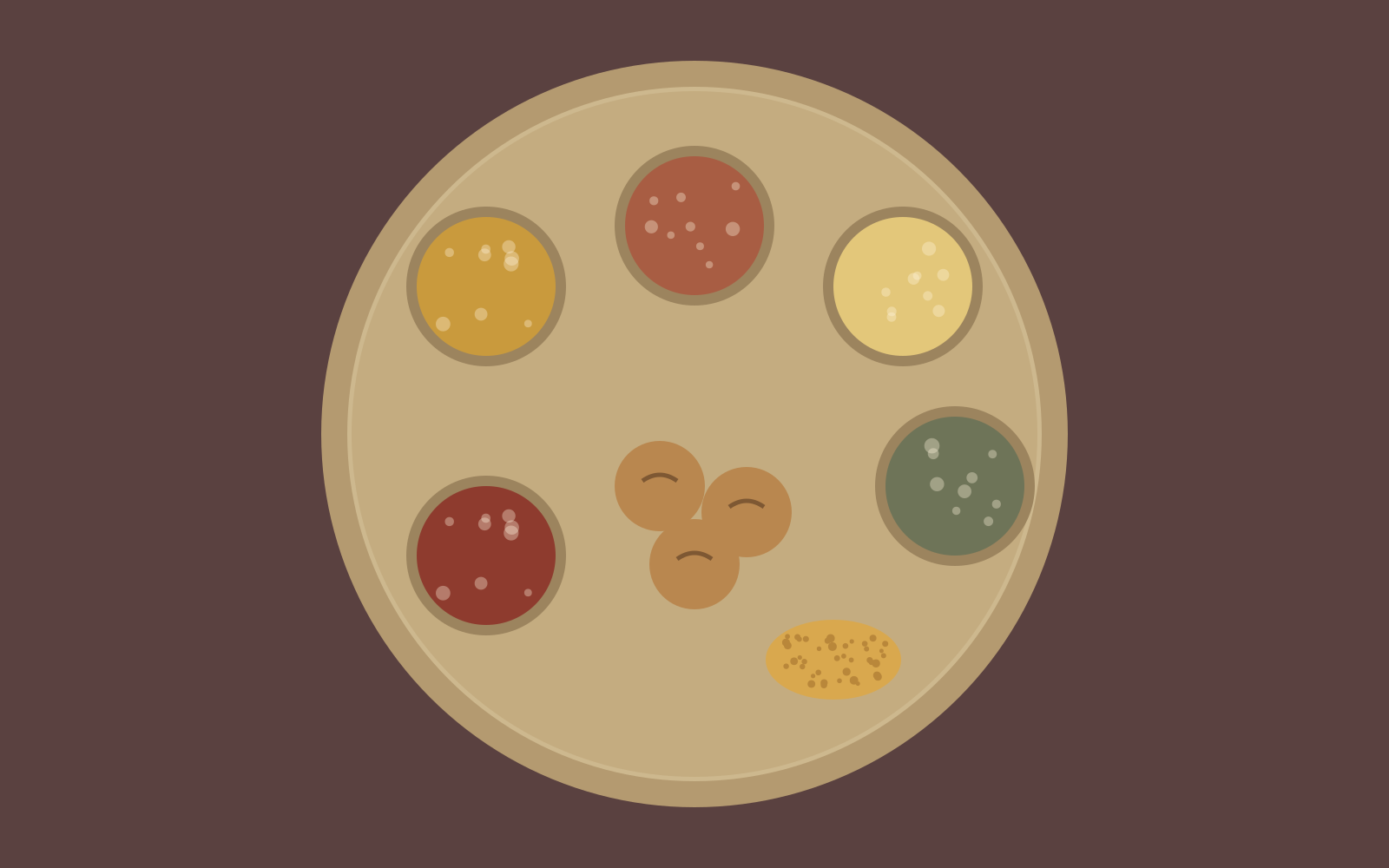
- Start with a little of everything. Taste each katori (small bowl) before mixing.
- Use bread as cutlery. Tear rotis or baati with your right hand and scoop.
- Mix rice last. Rice usually comes towards the end, with dal or kadhi.
- Sweets can come early. Don't be surprised to find churma or a sweet alongside savoury dishes — eat in any order.
- Refills are the point. In traditional thali houses, servers will keep refilling. Cover your plate with your hand when you're done.
A short glossary
| Word | Meaning |
|---|---|
| Baati | Hard, baked wheat dumpling |
| Churma | Crushed baati or dough with ghee and sugar or jaggery |
| Gatte | Gram-flour dumplings |
| Ker | Small, tart desert berry |
| Sangri | Dried bean pods of the khejri tree |
| Bajra | Pearl millet |
| Besan | Gram (chickpea) flour |
| Ghee | Clarified butter |
| Kadhi | Yoghurt and gram-flour curry |
| Mawa / khoya | Milk solids used in sweets |
Eating with the seasons
Rajasthani kitchens follow the calendar. Winter brings bajre ki roti with jaggery and ghee, and warming dishes with garlic and ginger. Summer calls for buttermilk, raab and cooling kadhis. The monsoon is ghewar season, especially around Teej, and the time for fried snacks with tea. Festivals such as Diwali and Holi bring their own sweets and savouries.
Food experiences
- Eat a thali at lunchtime in a traditional thali house, where staff refill your plate until you stop them.
- Take a cooking class — several homes in Jaipur, Udaipur and Jodhpur offer them.
- Do a breakfast walk of kachori and lassi in Jaipur's old city.
- Visit a sweet shop during a festival — especially for ghewar around Teej.
- Try a village meal where bajre ki roti is cooked on a wood fire.
Explore more in Eat & Drink, or plan where to eat in Jaipur and Jodhpur.
Frequently asked questions
Rajasthan is famous for dal baati churma, gatte ki sabzi, ker sangri, laal maas, bajre ki roti, kadhi, pyaaz kachori, mirchi bada, and sweets such as ghewar, mawa kachori and malpua.
A large part of everyday Rajasthani food is vegetarian, shaped by Jain and Vaishnav traditions and by the merchant communities of the state. Rajput households also developed meat dishes such as laal maas and safed maas.
Water and fresh vegetables were historically scarce in much of Rajasthan. Cooks relied on dried beans and berries, millet, gram flour, dairy and ghee, and on dishes that kept well for travel and hot weather.
Dal baati churma is a combination of baati (hard wheat-flour dumplings baked or roasted, then dipped in ghee), dal (usually a mixed lentil preparation), and churma (crushed baati or wheat mixed with ghee and sugar or jaggery).
It can be. Dishes like laal maas and mirchi bada are known for heat, while dal baati churma and many sweets are mild. You can ask for less chilli in most restaurants.